

Five Global Breakthroughs That Should Be on Every Health System CMIO's Radar Right Now

The clinical landscape your systems support is changing. Here's what the science actually says and what it means for your AI strategy.
The Viral Post That Got the Details Wrong and the Big Picture Right
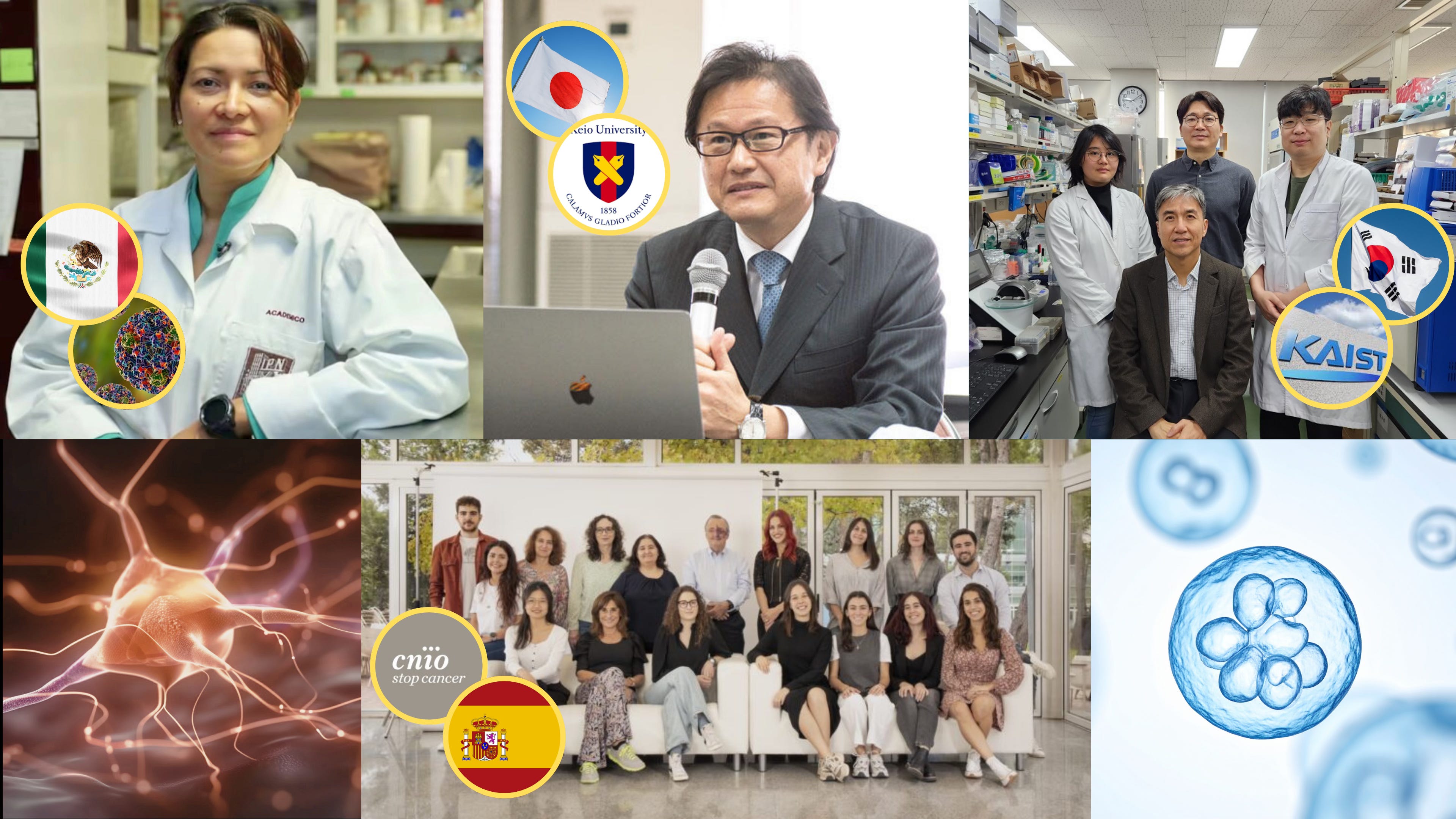
A social media post aggregating five recent medical breakthroughs went viral last week. 493 likes, 12,000 views, and a wave of public optimism about the future of cancer treatment. The post, attributed to biomedical AI commentator Bo Wang, highlighted advances from Mexico, Spain, Japan, South Korea, and Vietnam. The narrative was compelling. Non-invasive, targeted therapies are finally gaining ground against the diseases that have resisted conventional treatment for decades.
The problem? Several of the details were wrong. The Mexican HPV study targeted low-grade lesions, not high-grade. The Spanish tumor study eliminated pancreatic cancer in mice, not prostate cancer. And the framing glossed over the enormous distance between a promising mouse model and a treatment your oncology team can actually prescribe.
But here's what the post got right. Something fundamental is shifting in how we attack disease. And for those of us building and governing the technology infrastructure that supports clinical care, that shift has operational consequences we need to start planning for now.
What Actually Happened
I went back to the primary sources. Here's what the science supports.
Mexico. Photodynamic Therapy Clears HPV Without Surgery
Dr. Eva Ramón Gallegos and her team at Mexico's Instituto Politécnico Nacional used photodynamic therapy, a non-invasive technique combining a photosensitizing drug with targeted light, to treat 29 women with HPV and low-grade cervical lesions (CIN I). After six months, HPV was eliminated in 100% of patients. Lesion regression reached 64.3% in those with both HPV and CIN I. Published in Photochemistry and Photobiology.
The correction matters. The viral post claimed 50% success in high-grade lesions. The study addressed low-grade only. That's a clinically significant distinction, one that affects treatment protocols, patient counseling, and downstream coding. Small sample, early stage, but a genuinely promising non-invasive alternative to excisional procedures that compromise fertility.
Spain. Triple-Drug Combination Eliminates Pancreatic Tumors in Mice
Mariano Barbacid's group at Spain's National Cancer Research Centre (CNIO) combined three drugs and achieved complete, durable regression of pancreatic tumors across three mouse models. The combination included daraxonrasib (a KRAS inhibitor), afatinib (an EGFR inhibitor already approved for lung cancer), and SD36 (a STAT3 protein degrader). No resistance developed over 200 days. Published in PNAS, December 2025.
Pancreatic ductal adenocarcinoma has a five-year survival rate below 10%. Current therapies lose effectiveness within months as tumors develop resistance. The CNIO team's strategy of blocking three points in the KRAS signaling pathway simultaneously, rather than one, prevented the cancer from finding an escape route. Barbacid himself cautions that clinical trials are not yet feasible, but these are the strongest preclinical results ever reported for this cancer.
Japan. iPS Stem Cells Restore Standing in a Paralyzed Patient
Researchers at Keio University, led by Hideyuki Okano, transplanted neural stem cells derived from induced pluripotent stem (iPS) cells into four patients with complete spinal cord paralysis. One patient improved from grade A (no sensation or movement) to grade D. He can now stand independently and is training to walk. A second patient regained arm and leg movement. Two others showed no improvement. Announced March 2025, reported in Nature, not yet peer-reviewed.
This is the world's first spinal cord treatment using iPS cells. The inconsistency in outcomes is honest science and a reminder that regenerative medicine is still in its earliest translational phase.
South Korea. KAIST Discovers a Molecular Switch That Reprograms Cancer Cells
Professor Kwang-Hyun Cho's team at KAIST identified molecular switches targeting three genes (MYB, HDAC2, and FOXA2) that can revert colon cancer cells to a normal-like state. The approach was validated through cellular experiments and animal studies. Published in Advanced Science, January 2025.
This is a paradigm-level concept. Instead of killing cancer cells, you reprogram them. No chemotherapy. No collateral damage to healthy tissue. The technology has been transferred to BioRevert Inc. for commercial development. Still foundational, but the implications for future treatment design are significant.
The Strategic Signal for Healthcare Technology Leaders
Five countries. Four continents. Five fundamentally different therapeutic approaches, from photodynamic therapy and multi-drug targeted combinations to stem cell regeneration, genetic reprogramming, and engineered cell therapy. What unites them is a clear trajectory away from blunt-force treatment and toward precision, non-invasive methods that generate complex, multi-modal data at every stage.
For health system CIOs, CMIOs, and innovation officers, the operational implications are concrete.
Clinical decision support systems built on established chemotherapy and surgical protocols will need to evolve rapidly to incorporate emerging evidence from therapies that don't fit neatly into existing order sets. Novel treatments create novel billing, coding, prior authorization, and compliance challenges. Your revenue cycle wasn't designed for molecular reprogramming or domestically manufactured CAR-T cells. And multi-modal patient data (genomic sequencing, real-time treatment monitoring, longitudinal outcomes tracking) demands data architecture that most health systems haven't built yet.
The organizations that move now to align their AI strategy with this therapeutic trajectory will be positioned to deliver these treatments effectively and sustainably. The ones that wait will be retrofitting.
Why Getting the Details Right Is the Whole Point
The viral post's traction tells us something important. The public is hungry for progress in oncology and regenerative medicine. But the specific errors, high-grade vs. low-grade lesions, prostate vs. pancreatic cancer, aren't trivial. They're the kind of details that change treatment decisions, patient expectations, and clinical trial eligibility.
For healthcare organizations, this is a familiar problem at scale. Misinformation reaches patients and boards before vetted evidence reaches your clinical teams. AI-powered knowledge management, evidence integration, and decision support aren't nice-to-haves. They're the infrastructure that ensures your care teams and your patients are working from the same verified playbook.
The same rigor we applied to verifying these five breakthroughs is what's needed inside every health system's intelligence layer.
Looking Forward
These five breakthroughs are genuine reasons for measured optimism. They represent real science, published in credible venues, with honest caveats from the researchers themselves. They also represent a preview of the complexity heading toward every health system's front door, clinically, administratively, and operationally.
The question isn't whether these therapies will change medicine. It's whether your organization is building the intelligence layer to deliver them when they arrive.
At RealActivity, that's exactly what we help healthcare organizations do. We align clinical and administrative AI strategy with the future that's already in motion. If these questions are on your radar, we should talk.
Paul J. Swider is CEO and Chief AI Officer at RealActivity, where he leads clinical and administrative AI strategy for healthcare organizations. He is the founder of the Boston Healthcare Cloud & AI Community and speaks globally on responsible AI adoption in healthcare.